
January 2026 update: This guide provides private landlords with a comprehensive overview of the latest UK government housing regulations.
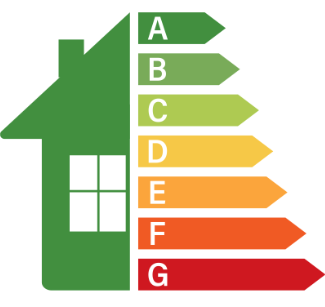
The Confirmed Roadmap for Landlords: EPC Band C by 2030
January 2026 was a landmark month for the UK housing market, finally shifting from policy speculation to a clear, actionable roadmap. With the government’s latest updates on Energy Performance Certificates (EPC) and Minimum Energy Efficiency Standards (MEES), private landlords now have the clarity needed to future-proof their investments.
The government has confirmed that all private rental properties must reach a minimum EPC Band C standard by 1 October 2030. Phased deadlines for new tenancies and existing tenancies have been replaced by this single, fixed date to simplify planning.
Easy, right? No. This simplification on deadline is counterbalanced by the fact EPC’s are being overhauled and new metrics are being introduced.
Understanding the New EPC Metrics for Landlords (Launching Late 2026)
Starting in the second half of 2026, the traditional A-G rating system will be joined by four headline performance metrics:
- Fabric Performance: Focuses on how well your property is insulated.
- Heating System: Assesses the efficiency and carbon intensity of your heating. Note that traditional gas boilers are unlikely to achieve a ‘C’ equivalent rating here.
- Smart Readiness: Measures the integration of smart controls, batteries, and solar technology.
Energy Cost: A clear annual running cost estimate in pounds (£) for tenants. This is broadly aligned with how your EPC rating is calculated today.
Compliance Path: Landlords to Target "Fabric First"
Under the proposed structure, a property will need a ‘C’ rating in Fabric Performance PLUS either:
- a ‘C’ in Heating System, or
- a ‘C’ in Smart Readiness
This means insulation and fabric upgrades will remain the foundation of compliance. It also means that you are not required to replace working heating systems, provided you set up your property to be ‘smart’.
Transitioning to the New System
The current EPC A-G rating will remain as a legacy metric on all new EPCs for a transitional period. Importantly, if your property achieves a Band C under the current system before 1 October 2029, it remains compliant until that certificate expires after 10 years.
Sector Comparison: Private Rentals vs Social Housing vs Holiday Lets
| Sample ID | Private Rented Sector (PRS) | Social Rented Sector (SRS) | Short-Term Lets (Holiday lets) |
|---|---|---|---|
| Current Status | Minimum EPC Band E | Roughly EPC F equivalent | Exempt |
| 2030 EPC Target | Grandparenting: If you get an EPC C under the current system before 1 October 2029, you are compliant until it expires. New scheme: You must meet Fabric Performance + 1 secondary metric (Heating or Smart) at EPC C by 1 October 2030. | Grandparenting: If you get an EPC C under the current system before 1 April 2028, you are compliant until it expires. New scheme: Meet EPC C in any 1 of 3 metrics by 1 April 2030. | Exempt but under review. Expected that they will be brought in line with other rentals in the future, with the UK Government currently consulting on this. |
| Long-term Target | New scheme: Fabric Performance + 1 secondary metric (Heating or Smart) at C | New scheme: 2 metrics at C by 1 April 2039. | Future scope under review. |
| Compliance Path | Fabric First: Primary fabric + one secondary. | Landlord Discretion: Any one of three metrics. | Valid EPC required for marketing. |
| Investment Cap | £10,000 (incl. VAT) | £10,000 (incl. VAT) | N/A |
Your Strategic Landlord Action Plan
- Portfolio Audit: Green Home Guide can help you identify which properties in your portfolio are already compliant and which require upgrades. It may be that with some changes you have implemented since your last EPC inspection, you have been nudged into C territory.
- Determine Cost-to-Comply: For properties currently below Band C, get quotes for improvements suggested by Green Home Guide now. If the cost of upgrade is low, it could be financially prudent to invest immediately.
- Bank Your Compliance: By upgrading now and securing a new EPC before October 2029, you can “bank” a 10-year period of compliance, avoiding the need to adapt to the more complex four-metric system until your certificate expires.
- Track Your Spend: Keep detailed records of all energy efficiency works installed from 1 October 2025, as these count toward your £10,000 cost cap.
Get your Green Home Guide today to see how your properties stack up against the 2030 EPC rules.
Key Sources
For full transparency and further technical details, you can reference the official government policy documents used for this guide:
- Improving the energy performance of privately rented homes: Government response
- The Warm Homes Plan (January 2026)
- Impact Assessment: Improving the energy performance of privately rented homes
- Improving the energy efficiency of socially rented homes: Summary of consultation response
- Delivering a decade of renewal for social and affordable housing (January 2026 update)
- Consultation: The Home Energy Model (HEM) and EPCs
- Reforms to the Energy Performance of Buildings regime (Partial Response)
- EHS Briefing: Modelling a new Decent Homes Standard
- Consultation on a reformed Decent Homes Standard (Government Response)